What Does Tewahedo Mean? One Word at the Heart of Ethiopian Faith
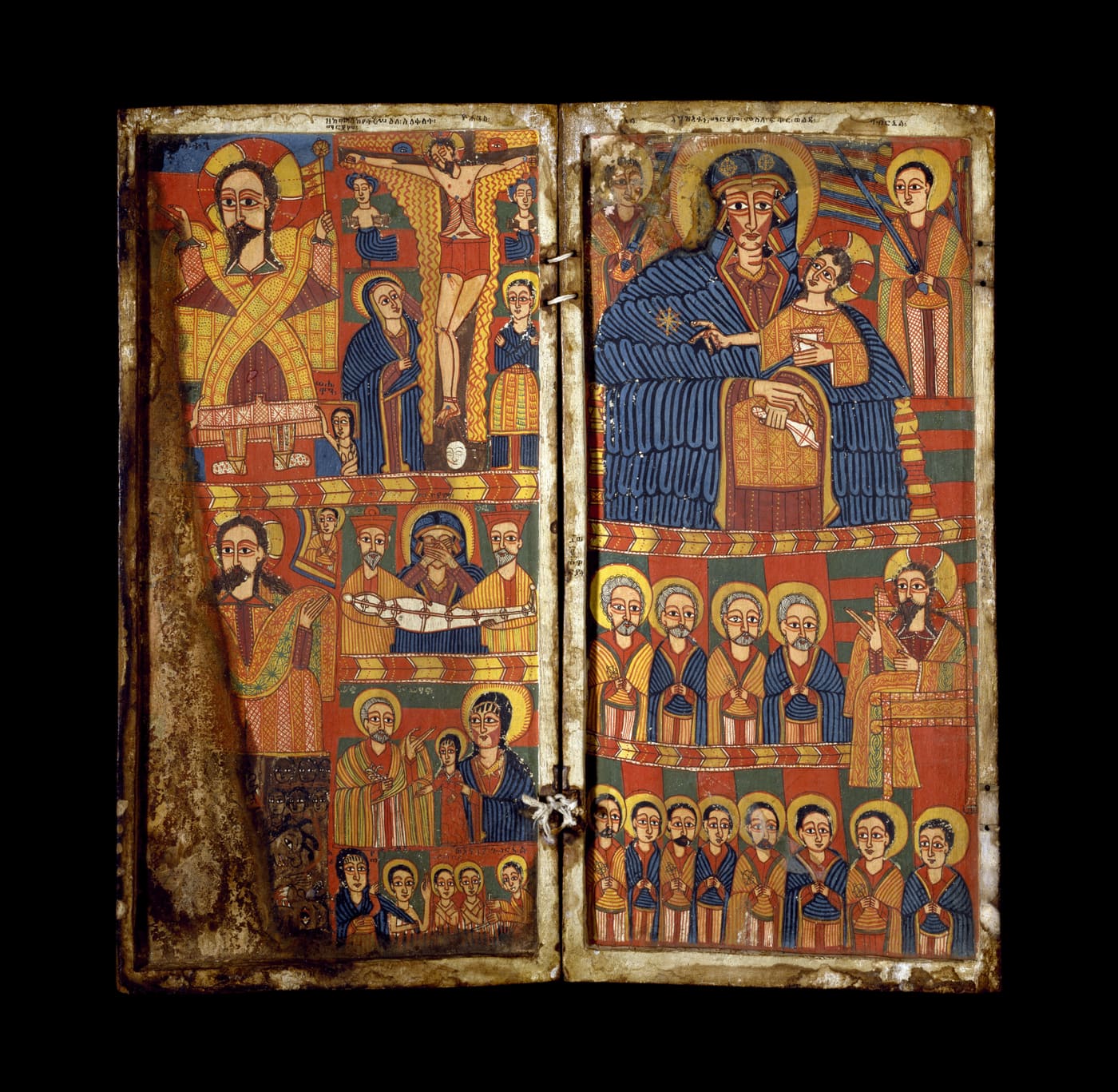
Tewahedo is a Ge'ez word meaning "made one" or "united." It expresses the Ethiopian Church's central teaching about Jesus Christ: that His divinity and humanity were truly united in one person and one nature, without being mixed, confused or changed. The Church uses the word in its very name.
- Tewahedo is a Ge'ez word meaning "made one" or "united."
- It teaches that Christ's divinity and humanity became one, without mixture, confusion or change.
- The teaching follows St. Cyril of Alexandria's phrase "one incarnate nature of God the Word."
- The Ethiopian Church did not accept the Council of Chalcedon in 451, and it rejects the label "Monophysite."
Tewahedo is a word from Ge’ez, the ancient language of Ethiopian worship, and it means “made one” or “united.” It describes how the Ethiopian Orthodox Church understands Jesus Christ: His divinity and His humanity were made one, in a single person and a single united nature.
The word matters so much that it is part of the Church’s full name, the Ethiopian Orthodox Tewahedo Church. Understanding it is one of the quickest ways to understand what makes this Church’s faith distinctive.
What does Tewahedo teach about Jesus?
Christians believe that God became a human being in Jesus Christ. As the Gospel of John says, “And the Word became flesh and dwelt among us” (St. John 1:14). The harder question is how one person can be both God and man.
The Tewahedo answer is that divinity and humanity came together in a true and complete union. The two were not placed side by side, and neither one swallowed up the other. The Church’s own Confession before Holy Communion says that the Son made His flesh one with His divinity “without mingling, without confusion, and without alteration.” You can read that prayer on the library’s page on the mystery of the Incarnation.
A simple way to hold the idea is to keep three points together:
- Christ is fully God. Nothing of His divinity was lost when He became man.
- Christ is fully human. He truly had a human body and soul, and He truly suffered.
- Christ is one. After the union there is one Lord, not two persons or two separate natures working alongside each other.
Where does this teaching come from?
The Ethiopian Church received its faith through the Church of Alexandria in Egypt. Its first bishop, Frumentius, was consecrated by St. Athanasius of Alexandria, whose defense of Christ’s divinity is still treasured in Ethiopia. You can read his great work in the library: St. Athanasius On the Incarnation of the Word of God.
A later Alexandrian teacher, St. Cyril, gave the phrase that stands behind the word Tewahedo: “one incarnate nature of God the Word.” For the Ethiopian Church, this phrase safeguards the truth that the one who was born of the Virgin Mary and died on the Cross is truly God the Son.
What happened at the Council of Chalcedon?
In 451, the Council of Chalcedon taught that Christ is known “in two natures.” The Churches that accepted this include today’s Roman Catholic and Eastern Orthodox Churches.
The Church of Alexandria and others refused the council’s definition. They feared that speaking of two natures after the union could divide Christ. These Churches, which include the Ethiopian Church, are now called the Oriental Orthodox family.
| Oriental Orthodox | Chalcedonian Churches | |
|---|---|---|
| Examples | Ethiopian, Coptic, Syriac, Armenian | Eastern Orthodox, Roman Catholic |
| Council of Chalcedon | Not accepted | Accepted |
| Way of speaking about Christ | One united nature from two | One person in two natures |
The disagreement is real, but it is narrower than it may look. Theologians from the Eastern and Oriental Orthodox families met in the late 20th century, and in agreed statements in 1989 and 1990 they recognized much common ground in what each side meant.
Why does the Church reject the word “Monophysite”?
Older books often call the Ethiopian Church “Monophysite,” a term built from Greek words for “one nature.” The Church rejects this label because it is linked with the view of Eutyches, who was understood to teach that Christ’s humanity was absorbed into His divinity. The Ethiopian Church condemns that teaching.
Scholars today often use the word “Miaphysite” instead, which points to one united nature rather than a single nature in which the human element has vanished. The library has a fuller discussion on its page about Monophysitism and Dyophysitism.
Has the meaning of Tewahedo been debated inside Ethiopia?
Yes. Over the centuries, Ethiopian teachers argued about how to describe Christ’s anointing and the union of His natures, and rival schools formed around these questions. In 1878, a council held at Boru Meda under Emperor Yohannes IV upheld the Tewahedo teaching as the position of the Church.
Why does this one word matter today?
For Ethiopian Orthodox Christians, Tewahedo is not only a term for theologians. It shapes how they worship. Because the one who lay in Mary’s arms is truly God, she is honored as the Mother of God. Because the flesh and blood received at Communion are united to His divinity, the Eucharist is approached with fasting and great reverence.
To go deeper, start with the library’s section on Christology.
Common questions
How do you pronounce Tewahedo?
It is usually said as teh-wah-HEH-doh in English, with the stress near the end. You may also see it spelled Tewahido or Tawahedo. These spellings all come from writing the same Ge'ez word in English letters, so none of them changes the meaning of the word.
Is the Ethiopian Orthodox Church the same as the Eastern Orthodox Church?
No. The Ethiopian Church belongs to the Oriental Orthodox family, along with the Coptic, Syriac, Armenian, Malankara and Eritrean Churches. These Churches did not accept the Council of Chalcedon in 451. The Eastern Orthodox Churches, such as the Greek and Russian, did accept it. The two families are separate, but they share a great deal.
Do Ethiopian Christians believe Jesus was fully human?
Yes. The Church teaches that Christ is fully God and fully human. Tewahedo does not mean that His humanity disappeared or was absorbed into His divinity. It means that the two were truly united in Him, so that the one Lord Jesus Christ is both God and man at once.
Sources
- Holy Bible, Gospel of St. John 1:14
- The Ethiopian Orthodox Church, edited by Aymro Wondmagegnehu and Joachim Motovu (1970)
- Council of Chalcedon, Encyclopaedia Britannica