Who Were the Nine Saints of Ethiopia? History, Tradition and Legacy
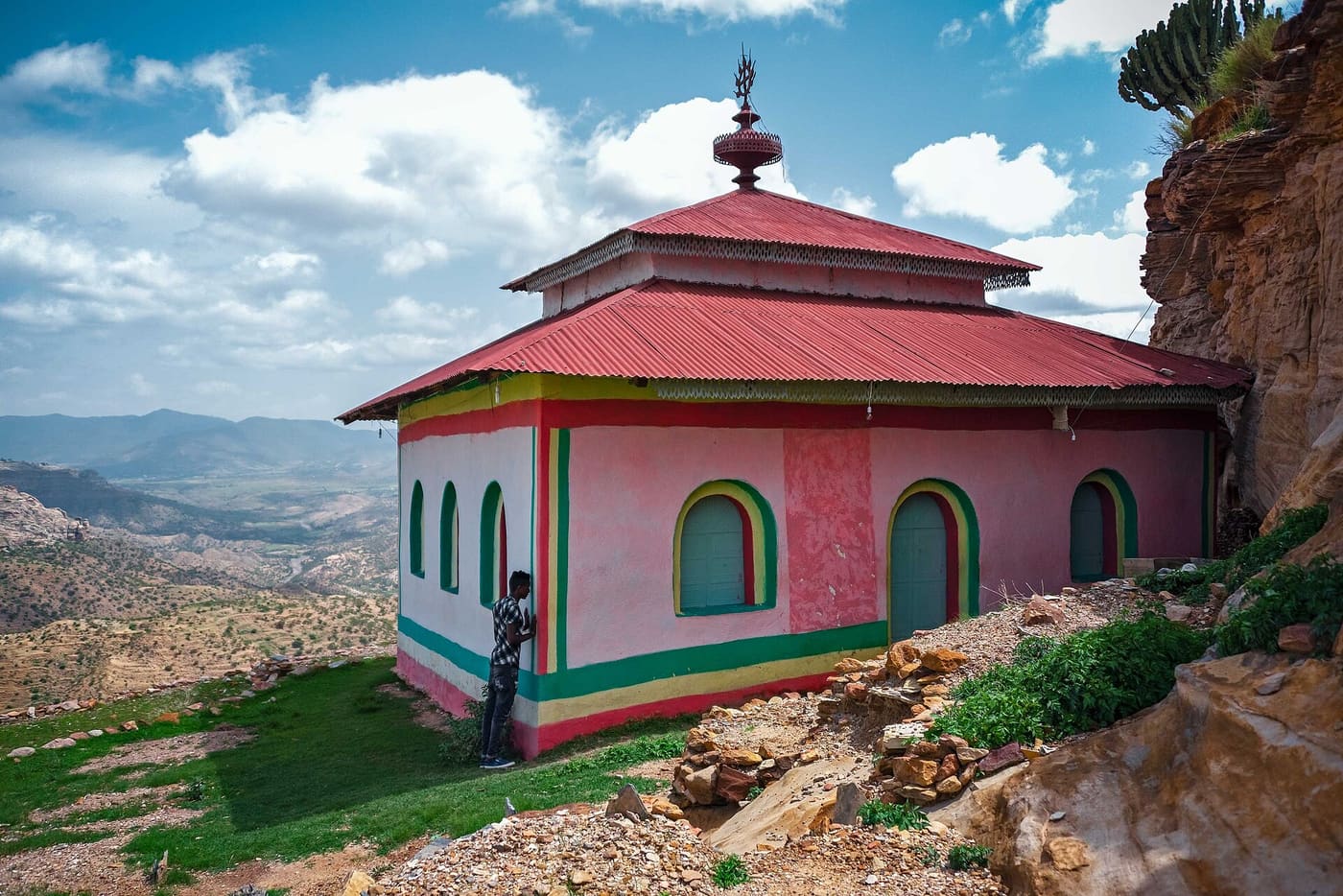
The Nine Saints were a group of monks who, according to Ethiopian tradition, came to the kingdom of Aksum from the eastern Roman world around the late fifth century. They are remembered for spreading Christianity in the countryside, founding the first monasteries, and helping translate the Scriptures and other Christian writings into Ge'ez.
- The Nine Saints were foreign monks who, in Ethiopian tradition, arrived at Aksum around 480 and settled across northern Ethiopia.
- Their stories come mainly from saints' lives written centuries later, so exact dates, origins and details are uncertain.
- They are credited with founding early monasteries such as Debre Damo, the monastery of Abba Aregawi.
- Tradition links them to translating the Bible and key Church writings into Ge'ez, a work scholars agree took place over a long period.
- Their legacy lives on in Ethiopian monasticism, in the Ge'ez Scriptures and in the Church's Christology.
The Nine Saints were a group of monks who, according to Ethiopian tradition, came to the Christian kingdom of Aksum from the eastern Roman world around the end of the fifth century. They are honoured for carrying the faith from the royal city into the countryside, founding Ethiopia’s first monasteries, and helping to translate the Bible and other Christian writings into Ge’ez, the ancient language of the Church.
Their memory is woven into Ethiopian Orthodox life. To understand them well, it helps to separate three things: what history can document, what the Church’s tradition holds, and what scholars still debate.
Who were the Nine Saints?
Christianity had already become the faith of the Aksumite court in the fourth century, through Saint Frumentius, known as Abba Salama, and King Ezana. Outside the capital, however, much of the country still followed older religions. The Nine Saints belong to the next stage: the spread of the faith into the wider land.
The names most often given for the nine are:
- Abba Aregawi, also called Za-Mikael
- Abba Pantelewon
- Abba Garima, also called Yeshaq (Isaac)
- Abba Afse
- Abba Gubba
- Abba Alef
- Abba Yem’ata
- Abba Liqanos
- Abba Sehma
“Abba” means “father” and is the usual title for a monk or priest. Spellings vary, because the names are written in English letters from Ge’ez.
What does tradition say about them?
The Church’s tradition, summarised in the site’s library page on Ethiopian Church history from the 4th to the 6th century, tells their story this way. The monks came from different parts of the eastern Roman Empire, including Syria and Constantinople. They held to the faith that rejected the Council of Chalcedon of 451, and they left their homelands at a time when that faith faced pressure from the imperial authorities.
Tradition says they spent time in Egypt, in monasteries of the kind founded by Saint Pachomius, before travelling to Aksum around 480. There the king welcomed them. They learned Ge’ez and the customs of the people, and then set out in different directions.
According to the library page, two stayed near Aksum, while the others went east and north and founded hermitages and monasteries, often at old pagan centres:
- Abba Aregawi founded the monastery of Debre Damo, on a mountain where, tradition says, serpent worship had long flourished.
- Abba Pantelewon turned a pagan temple near Aksum into a church.
- Abba Afse went to Yeha, an ancient pre-Christian centre, and transformed its famous temple into a church.
Many further stories are told in their gadl (plural gadlat), a Ge’ez word for a saint’s “struggle” or life story. One of the best known says that Abba Aregawi reached the top of the cliffs at Debre Damo with the help of a serpent sent by God. These stories are read in church and loved by the faithful as signs of God’s care.
What can historians actually document?
Here the picture becomes more cautious. Most of what is known about the Nine Saints comes from their gadlat, and these were written down centuries after the events, many of them in the medieval period. They preserve real memories, but they also reflect the concerns of the communities that wrote them.
As a result:
- Dates are approximate. The year 480 is the traditional date. Scholars generally place their arrival somewhere in the late fifth or early sixth century.
- Origins are uncertain. “Rome” in Ethiopian writing usually means the eastern Roman, or Byzantine, world. Some scholars point to Syrian links, partly because of Syriac influence on Ge’ez Christian vocabulary, but this is debated.
- The group may be partly a later grouping. The missionary movement was real, but some historians think the tidy number of nine may have been shaped over time, with monks of different generations remembered together.
What is firm is the overall pattern. From around this period, Christianity spread beyond the court, monasteries appeared in northern Ethiopia, and Ethiopian Christianity took on lasting ties to the wider Oriental Orthodox world. Ancient churches and monasteries linked to the Nine Saints, such as Debre Damo and the monastery of Abba Garima, still stand and are still in use.
Why are the Nine Saints so important for Ethiopian monasticism?
The Nine Saints are remembered as the founders of organised monastic life in Ethiopia. The library page on Church history notes that they translated the Ascetic Rules of Pachomius, which, it says, “still today regulate the monastic life of Ethiopia”, and the Life of Saint Anthony by Saint Athanasius.
Their monasteries became centres of prayer, learning and the copying of books. The site’s page on the 13th to 14th century explains that, for centuries afterwards, the ancient northern monasteries were where anyone seeking serious religious training had to go. The great medieval monastic revival, including figures like Iyasus-Mo’a, who studied at Debre Damo, grew from these roots. You can read more about this way of life on the library page on the monastic life.
How did they shape the Bible in Ge’ez?
Tradition credits the Nine Saints with the great work of translating the Scriptures into Ge’ez. According to the library page, only some books, such as parts of the Psalms, had been translated in the time of Saint Frumentius. The Nine Saints are said to have taken on the rest, perhaps each working on a different part, which would explain differences in style between books.
Scholars agree that the Ge’ez Bible is one of the earliest translations of the Scriptures. They also generally think the work was done over a long period, from Greek and possibly Syriac texts, rather than by one group at one moment. The Ethiopian canon itself is broader than most others; the library page on the Sacred Scriptures explains which books it includes.
The Nine Saints are also linked with translating writings of the Church Fathers, especially the work of Saint Cyril of Alexandria gathered in the collection known as Qerellos. These texts helped fix the Ethiopian Church’s teaching about Christ, expressed in the word Tewahedo, “made one”. The article What Does Tewahedo Mean? explains this teaching, and why the Church rejects the label “Monophysite”.
How are the Nine Saints remembered today?
The Nine Saints are honoured with feast days in the Ethiopian Church calendar, and their monasteries remain places of pilgrimage. Their influence is also felt in Church music: tradition holds that Saint Yared, to whom Ethiopian sacred chant is attributed, was a disciple of the Nine Saints, probably of Abba Aregawi.
The Garima Gospels, illuminated Gospel books kept at the monastery of Abba Garima, are linked by tradition to the saint himself. Scientific dating has suggested they are very old, which has drawn wide scholarly interest, though their exact dates are still discussed.
Customs around each saint’s feast differ from region to region and from one parish to another. For dates and local practice, it is best to ask at your parish or consult the Church calendar used there.
Common questions
Why are there exactly nine saints?
The number comes from Ethiopian tradition, which remembers them as a group of nine companions. Lists of their names are fairly stable, but the sources that record them were written long after their lifetimes. Historians therefore treat the group as a real missionary movement while accepting that the exact number and membership may have been shaped by later memory.
Where did the Nine Saints come from?
Ethiopian tradition says they came from "Rome", which in Ethiopian writing usually means the eastern Roman, or Byzantine, world. Some are linked with Syria and Constantinople. Many scholars think they came from Syriac-speaking or Greek-speaking communities that rejected the Council of Chalcedon, but their exact homelands cannot be confirmed.
Can visitors go to Debre Damo monastery?
Debre Damo stands on a flat-topped mountain in Tigray with sheer cliffs, and monks and visitors traditionally reach it by climbing a rope up the rock face. By long monastic custom, women are not admitted. Conditions for visiting can change, so anyone planning a trip should ask locally or through the Church before travelling.
Is the Garima Gospels book really from the Nine Saints' time?
Tradition holds that the Garima Gospels belonged to Abba Garima, one of the Nine Saints. Scientific dating of the manuscripts has suggested they are very old, possibly from the period of late antiquity, which fits the tradition broadly. Scholars still discuss the exact dates, so the link to Abba Garima himself remains a matter of tradition.
Sources
- Ethiopian Church History - 4th to 6th Century (site library)
- Ethiopian Church History - 13th to 14th Century (site library)
- The Ethiopian Orthodox Church, edited by Aymro Wondmagegnehu and Joachim Motovu (1970)
- Ethiopian Orthodox Tewahedo Church, Encyclopaedia Britannica
- Council of Chalcedon, Encyclopaedia Britannica